Most people can tell within seconds whether a website is good, even if they struggle to explain why. What makes a good website comes down to a handful of qualities that work together: purpose, speed, clarity, and trust. Get those right and visitors stay, engage, and take action. Get them wrong and they close the tab before your page even finishes loading.
It Starts With a Clear Purpose

Every good website knows exactly what it wants visitors to do. Some sites exist to generate leads, others to sell products, and others to build credibility in a local market. Without a clear purpose, design decisions, content choices, and page structure all pull in different directions.
A strong sense of purpose shows up in the first few seconds of a visit. Visitors should immediately understand who the site is for and what they’re being asked to do next.
- The homepage headline answers “what do you do and for who” without making visitors search for it
- Every page points toward a single goal rather than competing priorities
- Navigation doesn’t include pages that don’t serve the visitor directly
- The path to contact or inquiry is obvious from any page on the site
What Makes a Good Website Load Fast
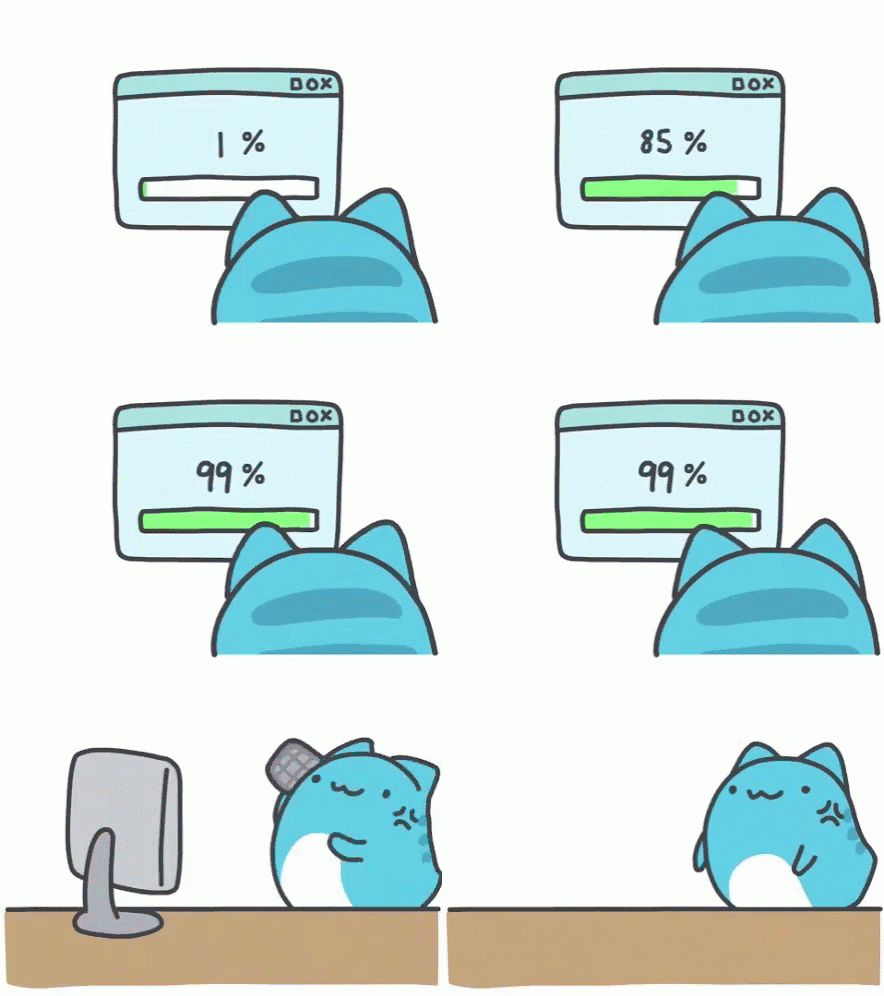
Page speed is one of the most measurable qualities of a good website, and one of the most overlooked. The longer a page takes to load, the more visitors leave before seeing anything. Google’s web performance standards measure real-world load speed and use it as a ranking signal.
Visitors don’t wait around. If a page takes too long, they close the tab and move to the next search result. That’s a lost visitor who may never come back.
| Load time | What typically happens |
|---|---|
| Under 2 seconds | Most visitors stay and engage |
| 2 to 3 seconds | A noticeable share of visitors leave |
| 3 to 5 seconds | More than half may abandon the page |
| Over 5 seconds | Most visitors are already gone |
Common causes of slow websites include large uncompressed images, too many third-party scripts, and shared hosting with limited resources. A fast website doesn’t happen by accident. It comes from deliberate technical decisions made during the build. At KC Web Design, every site we build is tested for speed and optimised before going live.
Design That Works on Every Screen

Mobile-friendly design is no longer optional. More than 60 percent of global web traffic comes from mobile devices, and Google indexes the mobile version of your site first. If your mobile experience is poor, your rankings suffer regardless of how good your desktop version looks.
A good website adapts to whatever screen it’s viewed on. Text stays readable without zooming, buttons are large enough to tap accurately, and nothing overflows off the edge of the screen. This is what responsive design means in practice.
Common mobile design problems that drive visitors away:
- Text too small to read without pinching the screen to zoom
- Buttons placed too close together to tap accurately
- Images and elements that overflow the screen on smaller devices
- Pop-ups that block the entire viewport and can’t be dismissed
Navigation That Gets Out of the Way

Good navigation is almost invisible. When it works well, users move through a site without thinking about it. When it fails, people get frustrated, click the back button, and look elsewhere. The website design process almost always starts with planning how users will move through the site, because poor navigation is very hard to fix after the fact.
What makes site navigation work well:
- A clear menu with no more than 6 to 7 items at the top level
- Labels that describe what’s on the page, not vague or clever wordplay
- A visible search function on content-heavy sites
- Breadcrumbs or back links so visitors always know where they are
- Footer links that surface important pages visitors didn’t find through the menu
A common mistake is using vague labels like “Solutions” or “Resources” when something far more specific, like “Web Design” or “Blog”, would serve visitors much better.
Content That Answers Real Questions

Website content is what keeps visitors engaged after they arrive. A site that looks polished but says nothing useful will fail to hold attention or convert visitors into customers. Good content is direct, specific, and answers the questions visitors actually have.
A good website isn’t a brochure. It’s a conversation. Every page should answer one question clearly before raising the next. If you’re still figuring out what your site needs to accomplish, start with what a website is actually for.
Key content principles that separate good websites from forgettable ones:
- Each page focuses on one topic or one goal, not everything at once
- Headings reflect what’s actually in the section, not vague titles that sound important
- Short paragraphs and clear structure make content scannable on any device
- Real examples, testimonials, and case studies carry far more weight than generic claims
Trust Signals That Build Confidence

A good website builds trust passively, without needing to ask for it. Visitors assess credibility quickly, often before they’ve finished reading the first paragraph. Trust signals are the small details that tell a visitor this business is real, professional, and worth their time.
Without them, even a visually attractive site can feel hollow. KC Web Design includes trust-building elements in every site we build, because good design alone doesn’t close the deal.
What builds trust
- A real phone number and physical address
- Client reviews with names and context attached
- Portfolio or case study examples
- SSL certificate (padlock in browser)
- Professional email address
What destroys trust
- Obviously staged stock photography
- Generic or placeholder text that says nothing
- No contact page or hard-to-find contact details
- Outdated copyright year in the footer
- Broken links or missing images
Clear Calls to Action That Guide Visitors
A call to action (CTA) tells visitors what to do next. Every page on a good website has at least one clear CTA, whether that’s getting in touch, reading another article, or requesting a quote. Without one, visitors reach the end of a page with no clear next step and simply leave.
Weak CTAs are one of the most common website problems. “Click here” or “Learn more” give no indication of what the visitor is actually getting. Strong CTAs are specific and remove the uncertainty.
- Use specific language: “Get a free quote” is far stronger than “Contact us”
- Place CTAs where visitors naturally pause or finish reading a section
- Make them stand out visually, without making the page feel like an advertisement
- Link directly to a form or next step, not to a long general contact page
At KC Web Design, we treat CTAs as a design element, not an afterthought. Get in touch to talk about what would work best for your site.
What Makes a Good Website Rank on Google

A good website that no one can find is only doing half its job. Search engine optimisation (SEO) determines whether your site appears when people search for what you offer. According to Google’s SEO Starter Guide, the foundations are straightforward: helpful content, clear page titles, fast load times, and easy navigation.
Knowing how to choose a web design company matters here too. A designer who ignores SEO during the build hands you a site that looks great but never gets found.
- A unique, descriptive title tag on every page
- A clear URL structure (e.g., /web-design/, not /page?id=42)
- Fast load times, covered in detail above
- Descriptive alt text on every image so search engines understand your content
- Internal links that connect related pages and help visitors explore the site
Moz’s Beginner’s Guide to SEO is a thorough starting point if you want to understand search in more depth.
Putting It All Together
What makes a good website is a combination of qualities, not a single feature or design trend. Speed, clarity, trust, mobile usability, and clear purpose all have to work together. If any one element is missing, the rest of the site works harder to compensate, and visitors notice.
- Clear purpose so visitors immediately understand what the site is for
- Fast load times so visitors don’t abandon before seeing anything
- Mobile-friendly design that works on any screen size
- Simple navigation that guides rather than confuses
- Trust signals that make a business feel credible and approachable
- SEO basics so the site actually gets found on Google
If you’re not sure how your current site stacks up, a good place to start is understanding how to build a website that serves your business goals from the ground up. Or speak with someone who can give you an honest, practical assessment of what’s working and what isn’t.
KC Web Design works with businesses across Australia to design and build websites that perform. Get in touch to find out what’s holding your site back.