
Most lists of free Australian business directories are copies of copies. The same names get passed around year after year and nobody checks whether the sites still exist.
So we checked. We opened every directory that used to be on this page, went to the sign-up form on each one, and worked out what a business owner actually gets today. A good number did not survive that test. Some have shut down, some now redirect to a completely different company, and some quietly became paid-only, so they are gone from this list.
This is the honest version, verified in August 2026. Every directory below was loaded and tested, and every one of them still offers genuinely free directory listings.
Want help with your online presence? See our SEO packages or get a free quote.
How to Set Up Your Online Directory Listings
The process is the same on almost every directory. Gather your details first, then work through the list below starting with Google Business Profile.
- Prepare your business details. You need a consistent business name, street address, phone number, website URL, operating hours and a short description of what you do. Use the same format across every site.
- Create an account on each directory. Start with the three that matter most (Google, Bing, Apple), then move through the Australian directories further down this page.
- Verify your listing. Most directories send a verification code by phone, email or postcard. Until you verify, the listing may not go live.
- Add photos and categories. A listing with a logo, a cover photo and the right business category gets more visibility than a text-only entry.
- Check back in a month. Confirm each listing is live and showing the correct details. Some directories take weeks to publish, and errors can creep in during the review process.
If you do not have a website yet, sort that first. Most directories require a URL, and a listing that points nowhere does not build confidence. See our website design services if you need a hand.
Why Directory Listings Still Matter
A directory listing does two jobs. It puts your business in front of people browsing that site, and it creates a citation, which is a public record of your business name, address and phone number.
Search engines use citations to work out whether a business is real and where it operates. When your details match across a dozen sites, that is a signal in your favour. When they conflict, it works against you. The citation is the job that matters most for local search, and it is why a listing you never look at again can still be pulling its weight.
The catch is that this only works if the details are correct everywhere. An old phone number sitting on a directory you forgot about does more harm than never listing at all. This is why NAP consistency matters: your business name, address and phone number need to be identical across every directory listing you create. Even small differences, like abbreviating "Street" to "St" on one site but not another, can weaken the citation signal.
How Long Before Online Directory Listings Affect Your Rankings
This is the question nobody gives a straight answer to, so here is what we actually see across the businesses we work with.
The listing itself usually goes live within a few days to a couple of weeks, depending on the directory. Manually reviewed sites like AussieWeb and PureLocal take longer than those with instant verification. Google Business Profile is typically the fastest to appear in search once verified.
The SEO effect takes longer. Search engines need to recrawl the directory page that carries your listing, then reconcile your details against what they already know. For a new business with few existing citations, expect three to six months of consistent online directory listings before you see measurable movement in local search results.
If your business already has a handful of citations and you are filling gaps, the effect compounds faster. The improvement comes not from any single directory but from the pattern: the same correct name, address and phone number showing up across a growing number of trusted sites.
Do not expect a direct traffic spike from most directories. The value is almost entirely in the citation signal and the occasional referral, not in people browsing directory sites and finding you there.
Start With the Three That Actually Move the Needle
If you only do three things from this page, do these. They feed the maps and search results where most people are actually looking, and all three are free.
Google Business Profile
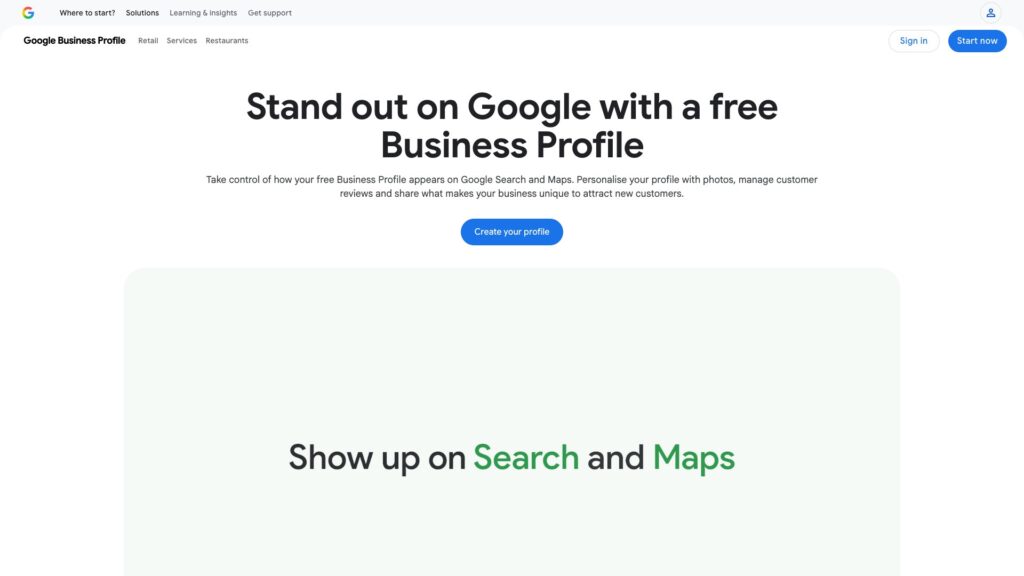
The single most valuable listing an Australian local business can have. It controls how you appear in Google Maps and in the local pack that sits above the normal search results.
Fill it out properly. Categories, hours, service area, photos, and a description that actually says what you do. Then keep asking for reviews, because review count and recency both feed into where you rank.
Sign up at business.google.com.
Bing Places for Business
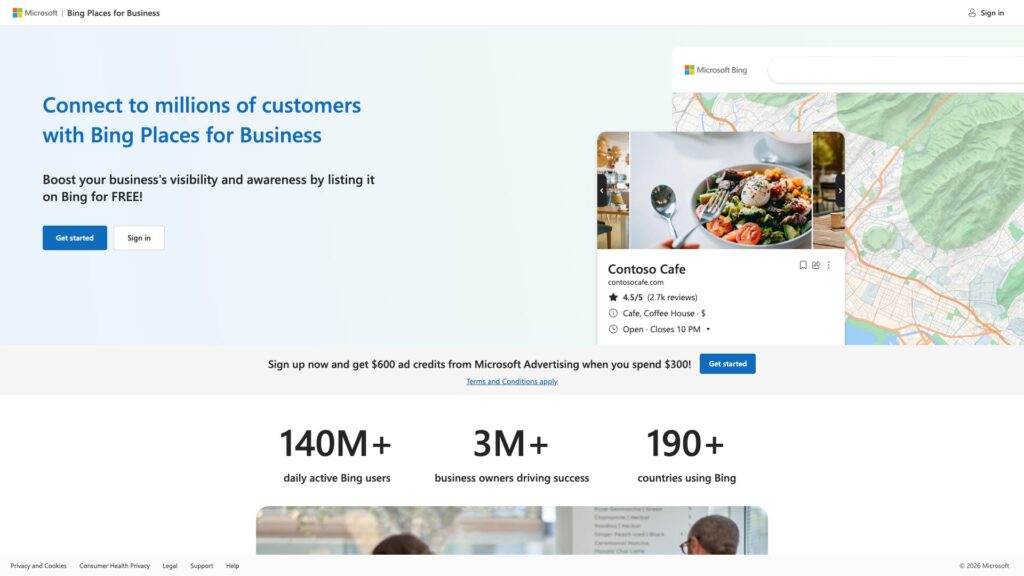
This one takes about ten minutes, because you can import everything straight from your Google Business Profile rather than typing it again.
Bing is a much smaller slice of Australian search than Google, so the direct traffic is modest. It is still worth doing, because Bing data feeds other places, including some AI assistants and Windows search.
Sign up at bing.com/forbusiness.
Apple Business
This is the one most businesses miss entirely. It controls how you show up in Apple Maps, which is the default map app on every iPhone in the country.
If you have never claimed your listing, there is a fair chance Apple is showing details it pulled from a third party years ago. Worth checking even if you do nothing else.
Sign up at business.apple.com.
Australian Directories Worth Listing On
These are all live, all still offer a genuinely free listing, and all were tested rather than taken on trust.
Yellow Pages
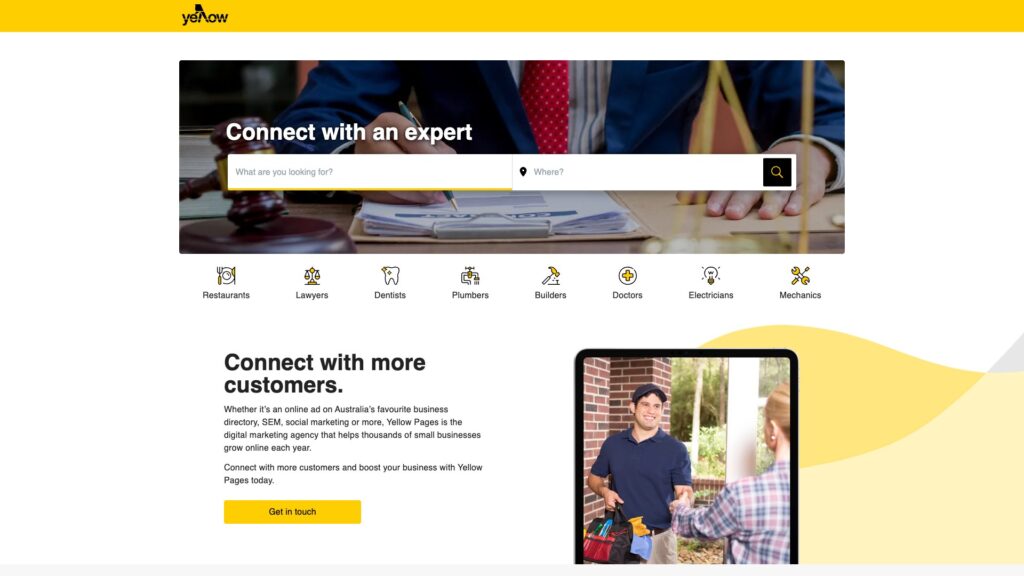
Still the biggest name in Australian directories, and a free listing is still available despite the site pushing its paid marketing packages fairly hard. The free sign-up sits on a separate page from the main sales site, which makes it easy to miss.
Free listing at view.yellow.com.au/online-signup.
Localsearch
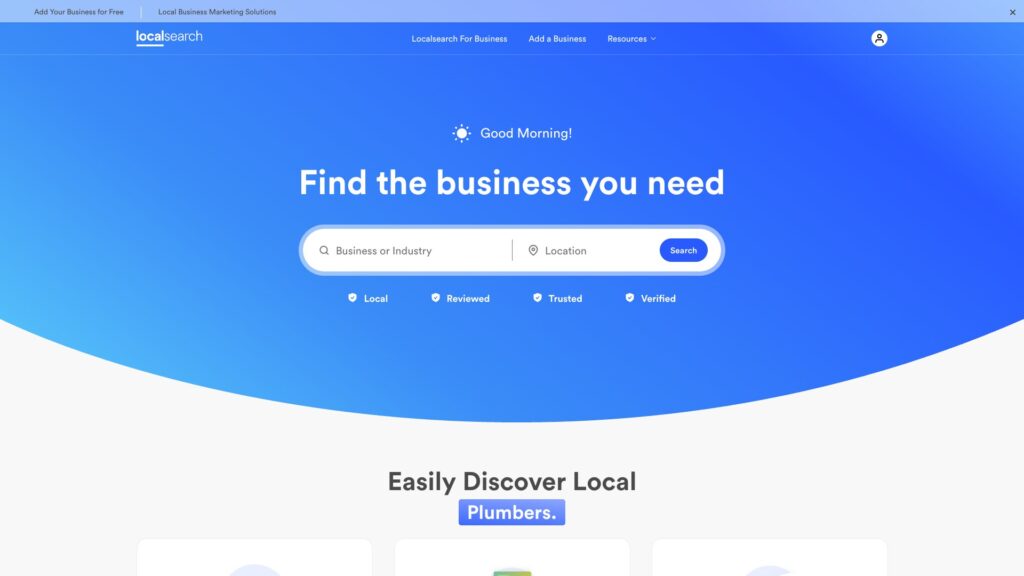
Strong in regional Australia, which makes it a better fit for businesses outside the capital cities than most national directories. The free profile is prominent and takes a couple of minutes.
Free listing at forbusiness.localsearch.com.au/create-profile.
Hotfrog
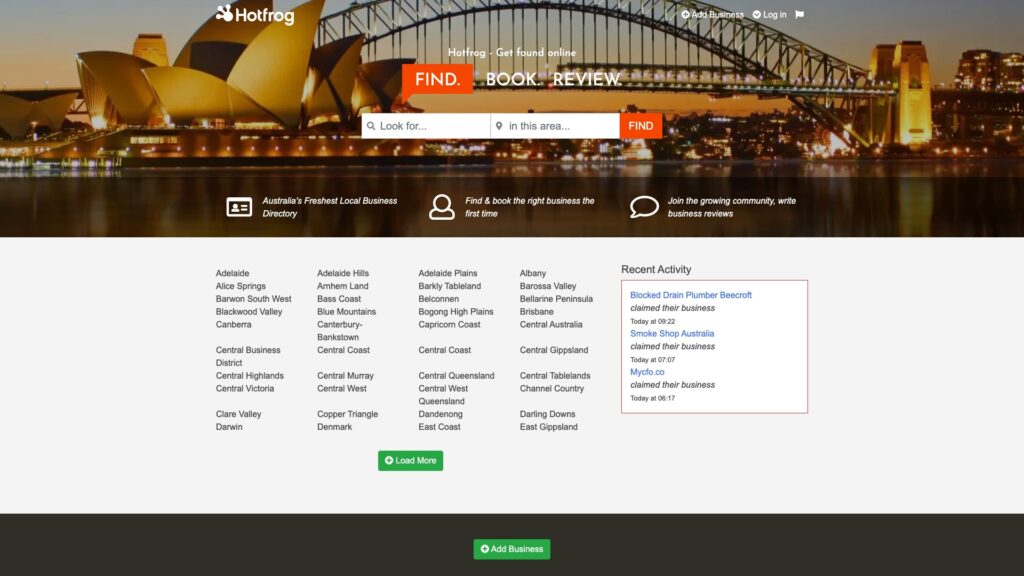
Free, and genuinely still in use. The homepage shows businesses claiming their listings the same day you visit. Sign-up is straightforward, and once you verify you can add images, a logo and opening hours.
Free listing at hotfrog.com.au/add.
AussieWeb
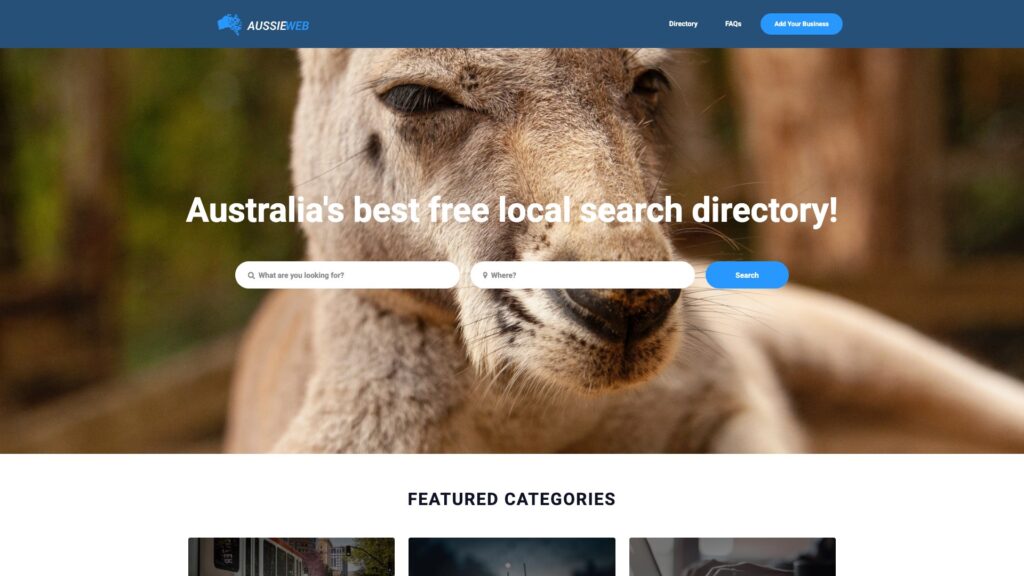
One of the older Australian directories, and refreshingly blunt about being free. The sign-up form states plainly that there are no costs involved, which is more than most of its competitors manage.
Be aware it is a manual verification process. They email you to confirm, check your details against your website, and often ring to verify the business. Allow several business days, and note they will not accept Hotmail, Yahoo or Outlook addresses.
Free listing at mylisting.aussieweb.com.au/add-listing.aspx.
Word of Mouth
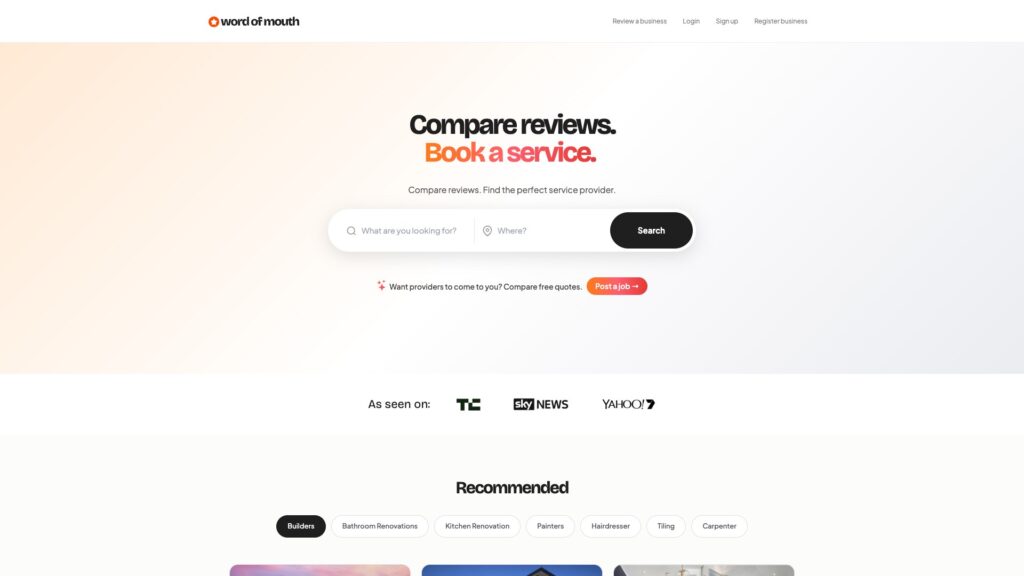
More a review platform than a straight directory, and one of the busier sites on this list. It carries close to a million registered businesses, with new reviews landing every few minutes.
Registration is free. There is a paid tier for review collection tools, but the basic listing costs nothing and still gives you the citation.
Free listing at wordofmouth.com.au.
Yelp Australia
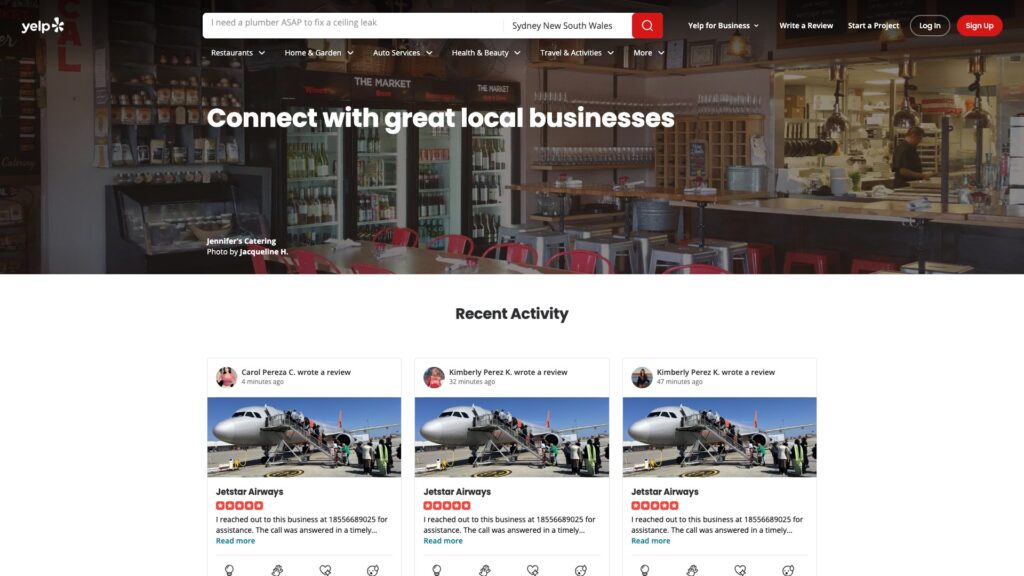
Yelp is far weaker in Australia than it is in the United States, so do not expect much direct traffic from it. Claiming your page is still free and still worth doing, because an unclaimed Yelp page showing wrong details is worse than a claimed one you ignore.
Free listing at business.yelp.com.
PureLocal
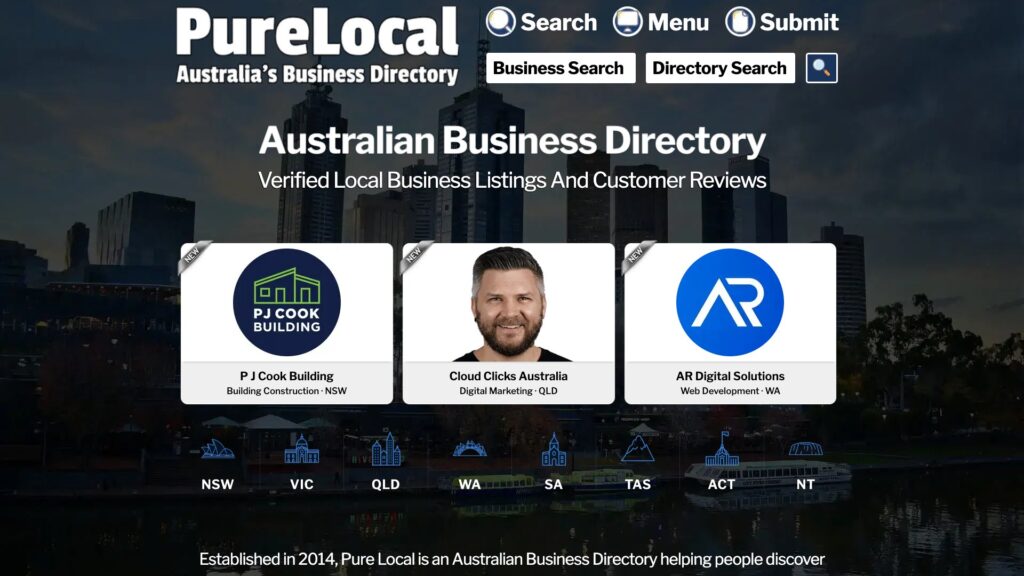
A smaller Australian directory that manually reviews every submission before publishing. Creating a listing account is free. The manual approval keeps the spam down, which makes the citation a little more credible than one from a directory that publishes anything it is sent.
Free listing at purelocal.com.au.
Brownbook
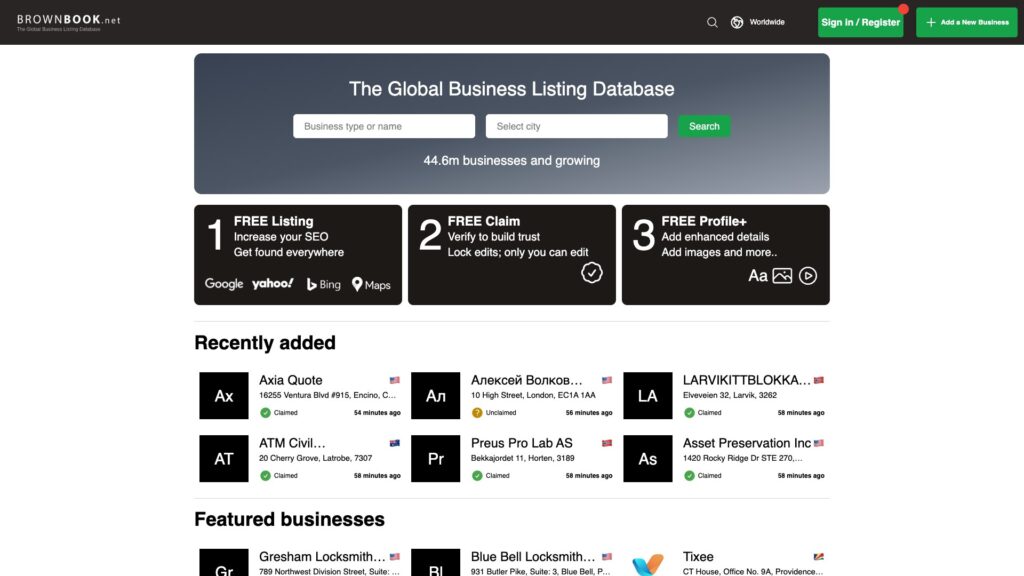
Global rather than Australian, but free to list, free to claim and free to add extra detail. Treat it as an easy additional citation rather than a source of traffic.
Free listing at brownbook.net.
dLook
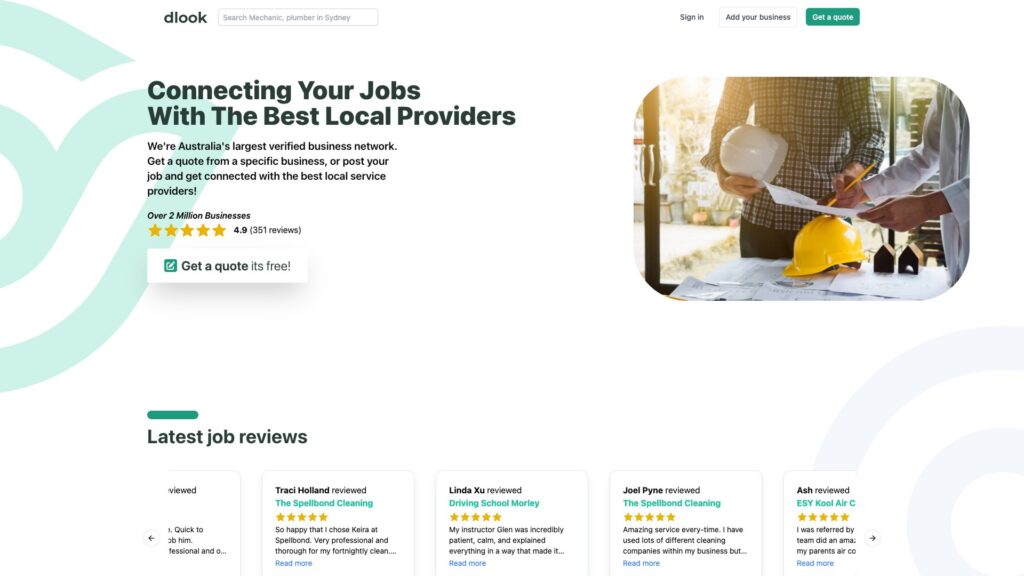
dLook positions itself as a quote and lead network rather than a traditional directory, so it works differently to everything else here. Customers post a job and get matched with providers.
Worth a look if you are in a trade or service category and want actual enquiries rather than just a citation.
Listings at dlook.com.au.
Facebook Page

A Facebook Page is free and works as a directory listing whether you use the platform for marketing or not. People search Facebook for local businesses, and the Page carries your name, address, phone number, hours and reviews.
Even if you never post again, claim it and keep the details current. An abandoned Page with a disconnected phone number is doing you damage.
Create one at facebook.com/business.
Which Directories to Prioritise Based on Your Industry
Every business should have the top three sorted first: Google Business Profile, Bing Places and Apple Business. After that, which directories you tackle next depends on what you do.
Trades and home services (plumbers, electricians, builders, cleaners): dLook works as a lead-gen platform for trades, not just a citation. Yellow Pages still carries weight in these categories because older homeowners search there by habit. Localsearch is strong in regional areas where many tradies operate.
Hospitality and retail (cafes, restaurants, shops): Yelp matters more here than in other industries, because its review audience skews toward food and retail. Facebook is essentially mandatory for hospitality. Customers check your Page for hours, menus and recent photos before visiting.
Professional services (accountants, lawyers, consultants): Word of Mouth's review platform suits professional services well, because clients searching for an accountant or solicitor put more weight on reviews than those hiring a plumber for a burst pipe. AussieWeb's manual vetting process makes its citation slightly more credible for professional firms.
Everyone else: Work through the full list in order. The three maps platforms, then Yellow Pages, then whichever of the remaining directories feels most relevant to your customers. Diminishing returns kick in quickly. Ten accurate online directory listings is roughly the point where adding more stops making a noticeable difference.
Getting the Most Out of Your Listings
- Keep the details identical everywhere. Same business name, same address format, same phone number. If you are “Smith & Sons Plumbing” on one site and “Smith and Sons Plumbing Pty Ltd” on another, you are weakening the signal you were trying to create.
- Write a different description for the top few. Copying one paragraph across a dozen sites adds nothing. It matters most on the directories people actually read.
- Add photos wherever they are allowed. A listing with images gets more attention than a text-only one on every platform.
- Diarise a review. Once or twice a year, run through your listings and check nothing has gone stale. Phone numbers change, businesses move, hours shift.
- Do not buy the upsell straight away. Almost every directory here will try to sell you a featured or premium placement shortly after you sign up. Get the free listings in place first and see what they do before spending anything.
Frequently Asked Questions
How long before a new listing shows up in search?
Usually a few weeks. The directory has to publish your listing, then search engines have to recrawl the page. It is not instant and it is not something you can speed up.
Is it worth listing on dozens of directories?
No. A small number of accurate listings on real directories beats fifty listings on link farms nobody visits. Once you have worked through the sites above, additional directories give you very little.
Do these listings help with AI search?
Indirectly. Assistants that answer local questions lean on maps data and established directory records, so the same accuracy that helps traditional local search helps here too. Google Business Profile and Apple Business matter most for this.
What if my details are wrong on a directory I never signed up for?
That happens often, because directories scrape data from other sources. Most have a claim process that lets you take ownership and fix it. Worth doing, because wrong details in one place can undermine correct details everywhere else.
Do I need to pay for premium directory listings?
For most businesses, no. The free tier on every directory listed here gives you the citation and, in most cases, a link back to your site. Paid upgrades buy placement and lead-generation features, not the citation value that made you list in the first place.
Does the Yellow Pages still exist in Australia?
The printed Yellow Pages was discontinued in 2019, but the online directory at yellowpages.com.au is still active and still offers a free listing. The brand recognition alone makes it worth doing.
Where should I list my business first?
Google Business Profile, then Bing Places, then Apple Business. These three control how your business appears on the maps and search results that most Australians use daily. Everything else on this page is worth doing, but those three are the priority.
Need help getting your business found online? Talk to us about your SEO strategy and we will point you in the right direction.
Are online business directories still useful in 2026?
For local search, yes. The citation value of having your business details consistently listed across reputable directories remains one of the signals search engines use to verify that a business is real and active. The directories themselves send very little direct traffic, but that was never the main reason to be on them.
How do I keep track of all my directory listings?
Keep a simple spreadsheet with the directory name, your login email, the URL of your listing page, and the date you last checked it. Set a calendar reminder every six months to run through the list and verify nothing has gone stale. If you change your phone number or address, that spreadsheet is the only way you will remember everywhere it needs updating.
Are some directories better for certain industries?
Yes. Yelp and Facebook matter more for hospitality and retail, where reviews and photos drive decisions. dLook suits trades and services because it works as a lead-matching platform rather than a passive listing. Word of Mouth and AussieWeb carry more weight for professional services. The three maps platforms are essential regardless of industry.